Showing posts with label Kingdom of Cambodia. Show all posts

Sunday, 6 November 2011

Welcome To Cambodia: A Video of Angelina Jolie's Journey to Cambodia

Welcome To Cambodia: A Video of Angelina Jolie's Journey to Cambodia

Angelina Jolie (born June 4, 1975) is an American actress. She has received an Academy Award, two Screen Actors Guild Awards, and three Golden Globe Awards, and was named Hollywood's highest-paid actress by Forbes in 2009 and 2011. Jolie is noted for promoting humanitarian causes as a Goodwill Ambassador for the United Nations High Commissioner for Refugees (UNHCR). She has been cited as the world's "most beautiful" woman, a title for which she has received substantial media attention.


Jolie made her screen debut as a child alongside her father Jon Voight in Lookin' to Get Out (1982), but her film career began in earnest a decade later with the low-budget production Cyborg 2 (1993). Her first leading role in a major film was in the cyber-thriller Hackers (1995). She starred in the critically acclaimed biographical television films George Wallace (1997) and Gia (1998), and won an Academy Award for Best Supporting Actress for her performance in the drama Girl, Interrupted (1999).

Jolie achieved wide fame after her portrayal of video game heroine Lara Croft in Lara Croft: Tomb Raider (2001), and established herself among the highest-paid actresses in Hollywood with the sequel Lara Croft Tomb Raider: The Cradle of Life (2003). She reinforced her reputation as a leading action star with Mr. & Mrs. Smith (2005) and Wanted (2008)—her biggest non-animated commercial successes to date—and received further critical acclaim for her performances in the dramas A Mighty Heart (2007) and Changeling (2008), which earned her a nomination for an Academy Award for Best Actress.

Divorced from actors Jonny Lee Miller and Billy Bob Thornton, Jolie now lives with actor Brad Pitt, in a relationship that has attracted worldwide media attention. Jolie and Pitt have three adopted children, Maddox, Pax, and Zahara, and three biological children, Shiloh, Knox, and Vivienne.

Humanitarian work related to Cambodia

Jolie first became personally aware of worldwide humanitarian crises while filming Lara Croft: Tomb Raider (2001) in Cambodia. She contacted the United Nations High Commissioner for Refugees (UNHCR) for information on international trouble spots. To learn more about the conditions in these areas, Jolie began visiting refugee camps around the world. In February 2001, she went on her first field visit, an 18-day mission to Sierra Leone and Tanzania; she later expressed her shock at what she had witnessed. In the following months, she returned to Cambodia for two weeks and met with Afghan refugees in Pakistan. She covered all costs related to her missions and shared the same rudimentary working and living conditions as UNHCR field staff on all of her visits. Jolie was named a UNHCR Goodwill Ambassador at UNHCR headquarters in Geneva on August 27, 2001.

Jolie has established several charitable organizations. In 2003, she founded the Maddox Jolie-Pitt Foundation—named the Maddox Jolie Project until 2007—which is dedicated to community development and environmental conservation in Cambodia's northwestern province Battambang. In 2006, she partnered with the Global Health Committee to establish the Maddox Chivan Children's Center, a daycare facility for children afflicted and affected by HIV in the Cambodian capital Phnom Penh. That same year, she and her partner Brad Pitt founded the Jolie-Pitt Foundation to aid humanitarian causes worldwide. In 2007, Jolie and noted economist Dr. Gene Sperling founded the Education Partnership for Children of Conflict, which funds education programs for children affected by man-made or natural disasters. In 2008, she collaborated with the Microsoft Corporation to establish Kids in Need of Defense, which provides free legal counsel to unaccompanied immigrant children in the U.S.

Jolie has received wide recognition for her humanitarian work. In 2003, she was the first recipient of the Citizen of the World Award by the United Nations Correspondents Association, and in 2005, she was awarded the Global Humanitarian Award by the UNA-USA. King Norodom Sihamoni awarded Jolie Cambodian citizenship for her conservation work in the country on July 31, 2005. In 2007, Jolie received the Freedom Award by the International Rescue Committee.

For instance, below is a video of Angelina Jolie's Journey to Cambodia:

An interview with Jolie that will be posted later in the month. In it, she is expected to discuss how her visit to Cambodia was a life-changing experience, awakening her to the plight of Third World countries. She adopted her eldest son, Maddox, from Cambodia and she and Brad Pitt established the Maddox Jolie-Pitt Foundation, which is active in community development and conservation in the country.

She's barefoot, wearing her own clothes, less makeup and toting her own elegantly weathered monogrammed Alto bag. Yet Angelina Jolie looks radiant and completely in her element, reclining on a wooden boat in a verdant, lakeside landscape in Cambodia's Siem Reap province. Jolie discovered the country in 2000 when she filmed "Lara Croft: Tomb Raider," and it sparked her humanitarian activism.

She's the latest celebrity to pose for Louis Vuitton's popular "Core Values" campaign — and surely the only one who brought four children to the photo shoot, some of whom had to be shooed out of Annie Leibovitz's frame.

Core Values celebrates Vuitton's timeless classics in real situations on 'real' people - meaning celebrities rather than models - and runs alongside their seasonal 'fashion' campaigns.

The campaign is expected to run for at least 18 months and will also feature a video interview with Jolie filmed on location later in the month.


Other sites you may want to see:

WWE: http://visa-wwe.blogspot.com/
The Kingdom of Wonder: http://welcome2cambodia.blogspot.com/
Daily Blogging: http://visablogging.blogspot.com/
Love Sharing: http://visa-love.blogspot.com/
NetworkSecurity: http://networksecuritynotes.blogspot.com/
About Insurance:http://visa-insurance.blogspot.com
All about Love: http://visa-love.blogspot.com/
Learning English Online: http://visa-elb.blogspot.com/
Discovery Internet: http://visa-isp.blogspot.com/

Read more...

If you like this post, please subscribe below,thanks!

Enter your email address:

Delivered by FeedBurner

To Get Update All Posts About Cambodia, Please Subscribe here,Thanks!

Tuesday, 4 October 2011

Welcome to Cambodia: Climate change hits home

Cambodia's deadly floodwaters, storms and droughts are the result of global climate change, Minister for Environment Mok Mareth told the Second National Forum on Climate Change yesterday.

“In the last year, many countries in the world, including Cambodia, have frequently encountered natural disasters intensified by the impact of climate change,” Mok Mareth said, adding that Cambodia had already seen increases in temperature and rainfall, and that the trend was predicted to continue.

With flooding claiming almost 150 lives over the past month, and destroying the crops of thousands of farmers, the impact of climate change was a palpable concern for speakers at the forum. They included United Nations resident coordinator Douglas Broderick and Ministry of Environment director-general Chay Samith, who opened the three-day conference in the capital.

“Cambodia is a country suffering from natural disasters as a result of climate change,” Chay Samith said. “Cambodia has experienced more severe floods, droughts and storms, which have had severe impacts on livelihoods and caused serious damage to property and crops,” he told the more than 700 people who had gathered for the forum.

Broderick said “Cambodia is highly vulnerable to climate change impacts”, and noted that flooding and drought, which are both linked to climate change, are major contributors to poverty.

Tin Ponlock, a conservation expert at the Ministry of Environment, said Cambodia had seen more intense rainfall patterns over the last 40 years and that this trend was expected to continue.

Deputy Prime Minister Yim Chhay Ly said climate change had seriously impacted agriculture, the economy and the poor. “This year flooding destroyed over 80,000 hectares of rice crops and about 500 people are believed to have died,” he said.

The official death toll currently stands at 148. Keo Vy, cabinet chief of the Natural Committee for Disaster Management, could not be reached yesterday to confirm the numbers.

Chan Youtha, cabinet chief at the Ministry of Water Resources and Meteorology, said floodwaters would continue to rise up to 0.5 meters in the Mekong River over the next few days due to heavy rains in Thailand and Laos, but they should begin receding from Thursday.

...

Read more at Phnompenhpost


Other sites you may want to see:

Entertainment on Flixya: http://visalittleboy.flixya.com/
WWE: http://visa-wwe.blogspot.com/
The Kingdom of Wonder: http://welcome2cambodia.blogspot.com/
Daily Blogging: http://visablogging.blogspot.com/
Love Sharing: http://visa-love.blogspot.com/
NetworkSecurity: http://networksecuritynotes.blogspot.com/
About Insurance:http://visa-insurance.blogspot.com
All about Love: http://visa-love.blogspot.com/
Learning English Online: http://visa-elb.blogspot.com/
Discovery Internet: http://visa-isp.blogspot.com/

Read more...

If you like this post, please subscribe below,thanks!

Enter your email address:

Delivered by FeedBurner

To Get Update All Posts About Cambodia, Please Subscribe here,Thanks!

Tuesday, 14 June 2011

Angkor is One of The Most Important Archaeological Sites in South-East Asia

I'm very proud of Angkor Wat, Cambodia is one of The Most Important Archaeological Sites in South-East Asia...

Angkor Wat from the top air

About Angkor Wat:


Angkor Wat (Khmer: អង្គរវត្ត) is a temple complex at Angkor, Cambodia, built for the king Suryavarman II in the early 12th century as his state temple and capital city. As the best-preserved temple at the site, it is the only one to have remained a significant religious centre since its foundation – first Hindu, dedicated to the god Vishnu, then Buddhist. It is the world's largest religious building. The temple is at the top of the high classical style of Khmer architecture. It has become a symbol of Cambodia, appearing on its national flag, and it is the country's prime attraction for visitors. Angkor Wat combines two basic plans of Khmer temple architecture: the temple mountain and the later galleried temple, based on early South Indian Hindu architecture, with key features such as the Jagati. It is designed to represent Mount Meru, home of the devas in Hindu mythology: within a moat and an outer wall 3.6 kilometres (2.2 mi) long are three rectangular galleries, each raised above the next. At the centre of the temple stands a quincunx of towers. Unlike most Angkorian temples, Angkor Wat is oriented to the west; scholars are divided as to the significance of this. The temple is admired for the grandeur and harmony of the architecture, its extensive bas-reliefs, and for the numerous devatas (guardian spirits) adorning its walls.

The modern name, Angkor Wat, means "City Temple"; Angkor is a vernacular form of the word នគរ nokor which comes from the Sanskrit word नगर nagara meaning capital or city. Wat is the Khmer word for temple. Prior to this time the temple was known as Preah Pisnulok, after the posthumous title of its founder, Suryavarman II.

Source: Wikipedia

Angkor Wat History:

Angkor Wat lies 5.5 km north of the modern town of Siem Reap, and a short distance south and slightly east of the previous capital, which was centred at Baphuon. It is in an area of Cambodia where there is an important group of ancient structures. It is the southernmost of Angkor's main sites.

The initial design and construction of the temple took place in the first half of the 12th century, during the reign of Suryavarman II (ruled 1113 – c. 1150). Dedicated to Vishnu, it was built as the king's state temple and capital city. As neither the foundation stela nor any contemporary inscriptions referring to the temple have been found, its original name is unknown, but it may have been known as Vrah Vishnulok after the presiding deity. Work seems to have ended shortly after the king's death, leaving some of the bas-relief decoration unfinished. In 1177, approximately 27 years after the death of Suryavarman II, Angkor was sacked by the Chams, the traditional enemies of the Khmer. Thereafter the empire was restored by a new king, Jayavarman VII, who established a new capital and state temple (Angkor Thom and the Bayon respectively) a few kilometres to the north.

In the late 13th century, Angkor Wat gradually moved from Hindu to Theravada Buddhist use, which continues to the present day. Angkor Wat is unusual among the Angkor temples in that although it was somewhat neglected after the 16th century it was never completely abandoned, its preservation being due in part to the fact that its moat also provided some protection from encroachment by the jungle.

One of the first Western visitors to the temple was Antonio da Magdalena, a Portuguese monk who visited in 1586 and said that it "is of such extraordinary construction that it is not possible to describe it with a pen, particularly since it is like no other building in the world. It has towers and decoration and all the refinements which the human genius can conceive of". However, the temple was popularised in the West only in the mid-19th century on the publication of Henri Mouhot's travel notes. The French explorer wrote of it:

"One of these temples—a rival to that of Solomon, and erected by some ancient Michelangelo—might take an honourable place beside our most beautiful buildings. It is grander than anything left to us by Greece or Rome, and presents a sad contrast to the state of barbarism in which the nation is now plunged."

Mouhot, like other early Western visitors, found it difficult to believe that the Khmers could have built the temple, and mistakenly dated it to around the same era as Rome. The true history of Angkor Wat was pieced together only from stylistic and epigraphic evidence accumulated during the subsequent clearing and restoration work carried out across the whole Angkor site.

There were no ordinary dwellings or houses or other signs of settlement including cooking utensils, weapons, or items of clothing usually found at ancient sites. Instead there is the evidence of the monuments themselves.

Angkor Wat required considerable restoration in the 20th century, mainly the removal of accumulated earth and vegetation. Work was interrupted by the civil war and Khmer Rouge control of the country during the 1970s and 1980s, but relatively little damage was done during this period other than the theft and destruction of mostly post-Angkorian statues.

The temple is a powerful symbol of Cambodia, and is a source of great national pride that has factored into Cambodia's diplomatic relations with its neighbour Thailand, France and the United States. A depiction of Angkor Wat has been a part of Cambodian national flags since the introduction of the first version circa 1863.

The splendid artistic legacy of Angkor Wat and other Khmer monuments in the Angkor region led directly to France adopting Cambodia as a protectorate on 11 August 1863. This quickly led to Cambodia reclaiming lands in the northwestern corner of the country that had been under Thai control since the Thai invasion of 1431 AD. Cambodia gained independence from France on 9 November 1953 and has controlled Angkor Wat since that time.

During the midst of the Vietnam War, Chief of State Norodom Sihanouk hosted Jacqueline Kennedy in Cambodia to fulfill her "lifelong dream of seeing Angkor Wat."

In January 2003 riots erupted in Phnom Penh when a false rumour circulated that a Thai soap opera actress had claimed that Angkor Wat belonged to Thailand.

Source: Wikipedia

Angkor Wat today:

The Archaeological Survey of India carried out restoration work on the temple between 1986 and 1992. Since the 1990s, Angkor Wat has seen continued conservation efforts and a massive increase in tourism. The temple is part of the Angkor World Heritage Site, established in 1992, which has provided some funding and has encouraged the Cambodian government to protect the site. The German Apsara Conservation Project (GACP) is working to protect the devatas and other bas-reliefs which decorate the temple from damage. The organisation's survey found that around 20% of the devatas were in very poor condition, mainly because of natural erosion and deterioration of the stone but in part also due to earlier restoration efforts. Other work involves the repair of collapsed sections of the structure, and prevention of further collapse: the west facade of the upper level, for example, has been buttressed by scaffolding since 2002, while a Japanese team completed restoration of the north library of the outer enclosure in 2005. World Monuments Fund began work on the Churning of the Sea of Milk Gallery in 2008.

Angkor Wat has become a major tourist destination. In 2004 and 2005, government figures suggest that, respectively, 561,000 and 677,000 foreign visitors arrived in Siem Reap province, approximately 50% of all foreign tourists in Cambodia for both years. The site has been managed by the private SOKIMEX group since 1990, which rented it from the Cambodian government. The influx of tourists has so far caused relatively little damage, other than some graffiti; ropes and wooden steps have been introduced to protect the bas-reliefs and floors, respectively. Tourism has also provided some additional funds for maintenance—as of 2000 approximately 28% of ticket revenues across the whole Angkor site was spent on the temples—although most work is carried out by foreign government-sponsored teams rather than by the Cambodian authorities.

Source: Wikipedia

Angkor is one of the most important archaeological sites in South-East Asia:

Angkor is one of the most important archaeological sites in South-East Asia. Stretching over some 400 km2, including forested area, Angkor Archaeological Park contains the magnificent remains of the different capitals of the Khmer Empire, from the 9th to the 15th century. They include the famous Temple of Angkor Wat and, at Angkor Thom, the Bayon Temple with its countless sculptural decorations. UNESCO has set up a wide-ranging programme to safeguard this symbolic site and its surroundings.

Angkor is one of the most important archaeological sites in South-East Asia. It contains the magnificent remains of the different capitals of the Khmer Empire, from the 9th to the 15th centuries. The influence of Khmer art, as developed at Angkor, was a profound one over much of South-East Asia and played a fundamental role in its distinctive evolution. Khmer architecture evolved largely from that of the Indian subcontinent, from which it soon became clearly distinct as it developed its own special characteristics, some independently evolved and others acquired from neighbouring cultural traditions. The result was a new artistic horizon in oriental art and architecture.

At the beginning of the 9th century the two states that covered the territory of modern Cambodia were united by Jayavarman II, who laid the foundations of the Khmer Empire, the major power in south-east Asia for some five centuries. One of the sites was in central Cambodia, to the north of Tonle Sap (Great Lake), where half a century later Jayavarman's son, Yashovarman, was to establish Yashodapura (later called Angkor), the permanent capital of the Khmer Empire until the 15th century.

The first city conformed with the classic form of Khmer capital with certain fundamental elements: a defensive bank and ditch with a state temple at its centre, built from brick or stone, and a wooden palace. There would also have been many secular buildings, constructed almost entirely of wood, in and around the enceinte. The state temple at Roluos, the Bakong, and the temple built in memory of the royal ancestors, Preah Ko, were erected around 880. Another essential feature of a Khmer capital, a large reservoir, was added a decade later, with in its centre a third temple built to the north-west of Roluos, around the hill of Phnom Bakeng, now known as the Eastern Baray.

The second capital at Angkor was built by Rajendravarman in the 960s, the state temple being situated at Pre Rup. He also constructed a temple, the Eastern Mebon, on an artificial island in the centre of the Eastern Baray. During his reign he built the exquisite temple of Banteay Srei. Rajendravarman's son, Jayavarman V, abandoned the Pre Rup site in favour of a new location with its state temple at Ta Kev, which was consecrated around 1000. Shortly afterwards he was overthrown by Suryavarman I, who was responsible for erecting the formidable fortifications around his Royal Palace and state temple, the Phimeanakas, and also for the construction of the great Western Baray.

In 1050 his successor created a new and more impressive state temple, the Baphuon. The succeeding rulers left little traces in the form of monumental buildings, and it was not until the accession of Suryavarman II in 1113 that the next great phase of building began. He was responsible for the greatest of all Khmer monuments, Angkor Vat, set within an extensive enclosure and dedicated to Vishnu. The death of Suryavarman II, around 1150, was followed by a period of internal strife and external pressure, culminating in 1177 with the sack of Angkor by the Chams. The situation was restored by Jayavarman VII, who celebrated his military success by creating yet another capital at Angkor Thorn and launching an unprecedented building campaign. His state temple was the towering Bayon, dedicated to Buddha.

Another significant element of the Angkor complex is the irrigation system of the region based on the great reservoirs, which provided the economic infrastructure for the successive Khmer capitals and their rulers.

Source: UNESCO/CLT/WHC

More links about Angkor Wat:

Read more...

If you like this post, please subscribe below,thanks!

Enter your email address:

Delivered by FeedBurner

To Get Update All Posts About Cambodia, Please Subscribe here,Thanks!

Sunday, 19 September 2010

Shinee Music Show Visit Cambodia

Shinee is a contemporary R&B South Korean boy band. Formed by SM Entertainment in 2008. The group consists of Onew, Jonghyun, Key, Minho, and Taemin. Since their debut, Shinee has won numerous awards. They have also starred in their own reality show based on their song, "Noona Neomu Yeppeo (Replay)". Shinee is considered to be a fashion icon having started the "Shinee Trend".

Shinee Band (Wikipedia)

Shinee performed a concert at Olympic Stadium in Phnom Penh, Cambodia on Tuesday 23 Feb 2010. The band’s visit to the country was arranged by the Cambodia Television Network (CTN) and its sister network MYTV. This is first time for Cambodian people that have a famous Korean Boy Band came in. It's very wonderful and very happy time to see them.

According to Phnompenhpost.com newspaper, during the visit the Shinee band also gave donation of US$10,000 to the Cambodia Children’s Fund. This is very great and helpful activity to help Cambodian children, especially for orphans.

To see the Shinee music show at Olympic Stadium, Phnom Penh, Cambodia...Please watch the video below:

SHINee Ring Ding Dong @ Cambodia (23 Feb 2010):

Read more...

If you like this post, please subscribe below,thanks!

Enter your email address:

Delivered by FeedBurner

To Get Update All Posts About Cambodia, Please Subscribe here,Thanks!

Thursday, 6 May 2010

Digging for the Truth About Angkor Wat

This post I'd love to introduce you the videos: "Digging for the Truth: Angkor Wat".

The Videos hosted by Hunter Ellis who visited Angkor Wat...

To find out more, Please watch the videos, including 5 parts:

Part1:


Part2:


Part3:


Part4:


Part5:

Read more...

If you like this post, please subscribe below,thanks!

Enter your email address:

Delivered by FeedBurner

To Get Update All Posts About Cambodia, Please Subscribe here,Thanks!

Friday, 19 February 2010

You Plan Your Trip to Cambodia: Kingdom of Wonder Yet?

The following article includes pertinent information that may cause you to reconsider what you thought you understood. The most important thing is to study with an open mind and be willing to revise your understanding if necessary.


The more authentic information about Visiting Cambodia you know, the more likely people are to consider you a Visiting Cambodia expert. Read on for even more Visiting Cambodia facts that you can share.

Most international visitors to Cambodia arrive by air at either Phnom Penh or Siem Reap. An increasing number of airlines are operating into Cambodia in response to the Cambodian governments open skies policy. The list of international airlines serving Cambodia includes; Bangkok Airways, China Southern Airlines, Dragonair, EVA Air, Lao Airlines, Malaysia Airlines, Mandarin Airlines, Mekong Airlines, Shanghai Airlines, Siem Reap Airways International, Silk Air, Royal Phnom Penh Airways, Thai Airways International and Vietnam Airlines.

For transport to the city centre when arriving at Phnom Penh, you will find taxis outside the arrival hall. The taxi fare from the airport to the city is US$7 and the trip will take about 15 minutes, depending on traffic.

In Siem Reap the cost of a taxi into the town area from the airport is US$5. Many of the larger hotels will offer free transport so let your hotel know your flight arrival details in advance.

Overland travel to Cambodia is possible through Thailand, Laos and Vietnam via border crossings.

Travelling around Cambodia

Air travel, bus, train, boat and taxi are all modes of transport available to tourists in Cambodia. Your selection is best determined by how far you wish to travel, the time you have available, the amount you want to spend and, sometimes, by the weather as during the wet season travel by road especially in the provinces can be very slow.

For getting around the major centres such as Phnom Penh, Siem Reap and Sihanoukville, the most common form of public transport is the moto (motorbike taxi). The motos are fast, cheap (negotiate the price before your trip) and readily available however if you are unfamiliar with sitting as a passenger on a motorbike in heavy traffic, such as in Phnom Penh, then you may prefer an alternative mode.

The quaint cyclo is also common in the cities and is a safer more pleasant way of getting around compared to the moto, although obviously slower! Again, negotiate the price first.

For comfort and safety your best option may be to hire a car, with a driver, and this will cost you around US$20-$25 per day. Your hotel/guesthouse will usually be able to arrange a car for you.

Where to stay

There are accommodation options to suit all tastes and budgets in Cambodia, from 5-star luxury hotels to inexpensive and friendly guesthouses. Please click on our Accommodation link to see an extensive list.

Currency / Banks / Credit Cards

The official currency of Cambodia is the Riel however US dollars are widely accepted; in fact many businesses set their prices in US dollars. It is however wise to carry some riel around with you for small purchases. The current exchange rate for the riel to the US$ is around 4000 riel = US$1.

The acceptance of credit cards is increasing in Cambodia and you can get cash advances against your credit card at some major commercial banks. There are however no ATMs that will provide access to foreign bank accounts. Click on the link for a full list of commercial banks in Cambodia.

Climate

Cambodia has a tropical climate that is warm and humid. In the monsoon season, abundant rain allows for the cultivation of a wide variety of crops and this year round tropical climate makes Cambodia ideal for the tourism industry. Visitors do need not fear natural disasters such as erupting volcanoes or earthquakes, and the country is not directly affected by tropical storms.


Cambodia can be visited throughout the year. However those planning to travel extensively by road should avoid the last two months of the rainy season when some countryside roads may be impassable.

The climate can generally be described as tropical. As the country is affected by monsoon, it is hot and humid with an overage temperature around 27.C (80.F) but in the dry season it is cool and very much like a European summer.

There are two distinct seasons: the Rainy Season and the Dry Season. However, the Dry Season is divided into two sub-seasons, cool and hot and these seasons are:

The Rainy season:
From June till October 27-35.C (80-95.f)

The Dry season (cool):
From November till February 17-27.C (80-95.F)

The Dry season (Hot) :
From March till May 29-38.C (84-100.F)

Cambodia is one of the few countries that visitors can enjoy all the year round.

So now you know a little bit about Visiting Cambodia. Even if you don't know everything, you've done something worthwhile: you've expanded your knowledge.

Read more...

If you like this post, please subscribe below,thanks!

Enter your email address:

Delivered by FeedBurner

To Get Update All Posts About Cambodia, Please Subscribe here,Thanks!

Wednesday, 25 November 2009

Khmer|Cambodian Delicious Foods Ever[Photos]>>>Hungry...Hungry!

Khmer cuisine is another name for the food widely consumed in Cambodia. The food of Cambodia includes tropical fruits, rice, noodles, drinks, dessert and various soups.

The staple food for Cambodians is rice. Almost every meal includes a bowl of rice, although noodles are also popular. A wide range of curries, soups and stir fries are served with rice. Many rice varieties are available in Cambodia, including aromatic rice and glutinous or sticky rice. The latter is more commonly found in desserts with fruits like durian.

Khmer Cuisine shares much in common with the food of neighbouring Thailand, although it is generally not as spicy; and Vietnam, with whom it shares many common dishes and a colonial history, both being part of the French colonial empire in Southeast Asia. It has also drawn upon influences from the cuisines of China and France, both of whom are powerful players in Cambodian history. Curry dishes, known as kari (in Khmer) show a trace of cultural influence from India. The many variations of rice noodles show the influences from Chinese cuisine. Rice noodle soup, known simply as Kuyteav, is a popular dish brought to Cambodia by Chinese settlers from generations past. Also, Banh Chiao is the Khmer version of the Vietnamese Bánh xèo. A legacy of the French is the baguette, which the Cambodians often eat with pâté, tinned sardines or eggs. One of these with a cup of strong coffee, sweetened with condensed milk, makes an excellent breakfast that will set one up for day.

Typically, Cambodians eat their meals with at least three or four separate dishes. A meal will usually include a soup, or samlor, served alongside the main courses. Each individual dish will be either sweet, sour, salty or bitter. Chili is usually left up to individuals to add themselves. In this way Cambodians ensure that they get a bit of every flavour to satisfy their palates.


The following is the Khmer or Cambodian Delicious Food-Photos, I would love to share with you:

Please comment after seeing the photos,Thanks!

Sour chicken soup [Photo on Flickr by rockYoface]

Teuk prahoc sach ko (grilled beef with prahoc dipping sauce) [Photo on Flickr by duxyak]

Khmer Food: Nhoam (Salad) [Photo on Flickr by rockYoface]

Khmer Food: Lok Lak [Photo on Flickr by rockYoface]

Lemongrass chicken/ shrimp coconut soup [Photo on Flickr by rockYoface]

Bok Lahong (papaya salad) [Photo on Flickr by rockYoface]

Prohok-Khtis and Amok [Photo on Flickr by Viirak]

Another Papaya Salad (Bok Lahong) [Photo on Flick by sampoch production]

Khmer BBQ Chicken [Photo on Flickr by Taekwonweirdo]

Khmer Food: Crab (Kdam Tramm) with delicious Mango [Picture on Flickr by May-Ong ]

S'ngoaw Ch'rouk Trey (Sour Soup with Fish) [Photo on Flickr by xWanna]

Khmer Appetizer [Photo on Flickr by ssour]

Khmer Food: Cambodian Noodle (Numm Banh Chok) [Photo on Flickr by Liz and Karim]

Khmer Food: Bor Bor (Porridge) [Photo on Flickr by kenneth07]

Khmer Food: Beef Balls Soup [Photo on Flickr by kenneth07]

Squid Food Cambodia [Photo on Flickr by hn.]

Are you hungry now?
Please come to visit Cambodia to have a try on Cambodian Foods, Khmer Foods!

Read more...

If you like this post, please subscribe below,thanks!

Enter your email address:

Delivered by FeedBurner

To Get Update All Posts About Cambodia, Please Subscribe here,Thanks!

Monday, 13 July 2009

Discover Cambodia: Cambodia Tour

Have you ever visited Cambodia? If you not yet visited, Please enjoy Cambodia tour with video below or spend some days to visit the Kingdom of Wonder, Thanks!

1. First video: Discover Cambodia today!Meet the people and learn about the culture and history of Cambodia!In this video we will take you to the old Khmer city "Phnom Da" by boat and join the Khmer religion ceremony...


2. Second video: Visit the palace that built during the French's and take a Cambodian Express Train..stop by at the Beer Garden and Enjoy Khmer Karaoke and dance..By the way you will explore Sihanouk ville...


3. Third video: Visit the Killing Fields and S-21 Khmer Rouge torture chamber. Explore the central markets "Phsar Thmei and taste the food there "cricket and many more ...visit the Royal Palace by riding a motodup...


4. Fourth video: Take a boat trip to Siem Reap Angkor and explore Tonlesap river and the floating houses...Try Khmer palm wine with fry daddy and baby frogs...finally you will see the most beautiful Angkor Wat...


Read more...

If you like this post, please subscribe below,thanks!

Enter your email address:

Delivered by FeedBurner

To Get Update All Posts About Cambodia, Please Subscribe here,Thanks!

Wednesday, 24 June 2009

Cambodia: Kingdom of Wonder-KamPuChea: Preah ReaCheaNaChak AChhakRakYeak


This post I would like to share with you a Cambodian popular video song with the title: "Kingdom of Wonder" sung by Preab Sovath and Sokun Nisa. This is one of the songs in Best of The Best 2009 concert. The concert was celebrated on 2nd of February 2009 at Naga World Hotel, Phnom Penh, Cambodia. Best of The Best 2009 was created in a cooperation between Cambodian Ministry of Tourism and Reak Smey Hang Meas Company in the purpose of showing the world about the potentiality of Cambodian tourism, especially to make the world know about Cambodia as "Cambodia: Kingdom of Wonder". Cambodian artists who joined Best of the Best 2009 include Mr. Preab Sovath, Pich Sophea, Chhorn Sovann Reach, Sokun Nisa, Sapun Midada, Chhit Sovann Panha, Nop Panharith, Oak Sokun Kanha, Sok Reaksa, Rin Saveit and other artists like Prum Marnh, Cambodian comedian groups: Neay Krem and Neay Koy.

To know the meaning of the song, please enjoy watching the video below:


Cambodia: Kingdom of Wonder-Kam Pu Chea: Preah Rea Chea Na Chak A Chhak Rak Yeak:

- Welcome to Cambodia!--Som Sva Kum Mork Kann Kam Pu Chea

- Happy to see you here Cambodia!--Riik Reay Doy Barn Chuob Neak Nov Kam Pu Chea!

Read more...

If you like this post, please subscribe below,thanks!

Enter your email address:

Delivered by FeedBurner

To Get Update All Posts About Cambodia, Please Subscribe here,Thanks!

Thursday, 11 June 2009

Khmer Art-Cambodian Art (more)


[Photo by Yllavm on Flickr: Apsara Sculpture]

In my previous post about Cambodian art, I have already mentioned the 2 points, Khmer Dance and Khmer music, that show the world how the Cambodia's art it is that makes the country to be known as a country rich of culture. In addition to the previous two points, today, please find out more about the Cambodian art with one more important point below:

3. Khmer Visual Arts: The history of visual arts in Cambodia stretches back centuries to ancient crafts. Traditional Cambodian arts and crafts include textiles, non-textile weaving, silversmithing, stone carving, lacquerware, ceramics, wat murals, and kite-making.

Khmer Visual Arts can be divided into two types:

- Khmer traditional visual art and

- Modern and contemporary visual arts

a.Traditional visual art: is a kind of visual art including Textiles, Non-textile weaving, Stone carving, Lacquerware, Silversmithing, Ceramics, Temple murals, Masks, Kites...

Textiles (Silk Weaving)


[Photo by Wikipedia: Cambodian woman weaving silk near Siem Reap]


[Photo by christopherlevy on Flickr: Khmer Textile]

Silk weaving in Cambodia has a long history. The practice dates to as early as the first century, and textiles were used in trade during Angkorian times. Even modern textile production evidences these historic antecedents: motifs found on silk today often echo clothing details on ancient stone sculptures.

Cambodia's modern silk-weaving centers are Takeo, Battambang, Beanteay Meanchey, Siem Reap and Kampot provinces. Silk-weaving has seen a major revival recently, with production doubling over the past ten years. This has provided employment for many rural women. Cambodian silk is generally sold domestically, where it is used in sampot (wrap skirts), furnishings, and pidan (pictoral tapestries), but interest in international trade is increasing.

Cotton textiles have also played a significant role in Cambodian culture. Though today Cambodia imports most of its cotton, traditionally woven cotton remains popular. Rural women often weave homemade cotton fabric, which is used in garments and for household purposes. Krama, the traditional check scarves worn almost universally by Cambodians, are made of cotton.

Non-textile weaving


[Photo by Oziahz: Basket Weaving]

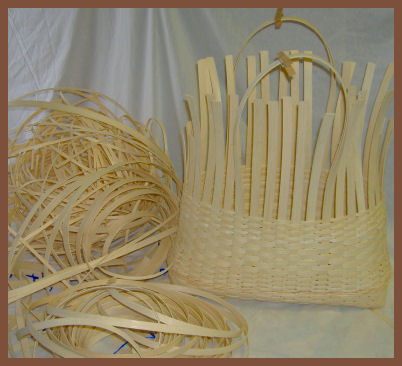
Many Cambodian farmers weave baskets (Khmer: tbanh kantrak) for household use or as a supplemental source of income. Most baskets are many of thinly cut bamboo. Regions known for basketry include Siem Reap and Kampong Cham. Mat weaving (tbanh kantuel) is a common seasonal occupation. They are most commonly made from reeds, either left a natural tan color or dyed in deep jewel tones. The region of Cambodia best-known for mat weaving is the Mekong floodplain, especially around Lvea Em district. Mats are commonly laid out for guests and are important building materials for homes. Wicker and rattan crafts (tbanh kanchoeu) made from dryandra trees are also significant. Common wicker and rattan products include walls, mats, furniture, and other household items.

Stone carving (Sculpture)


[Photo by Felix_KL on Flickr: Apsara dancers carved in stone at Angkor Wat temple, Siem Reap, Cambodia. 2006]

Cambodia's best-known stone carving adorns the temples of Angkor, which are "renowned for the scale, richness and detail of their sculpture". In modern times, however, the art of stone carving became rare, largely because older sculptures survived undamaged for centuries (eliminating the need for replacements) and because of the use of cement molds for modern temple architecture. By the 1970s and 1980s, the craft of stone carving was nearly lost.

During the late 20th century, however, efforts to restore Angkor resulted in a new demand for skilled stone carvers to replace missing or damaged pieces, and a new tradition of stone carving is arising to meet this need. Most modern carving is traditional-style, but some carvers are experimenting with contemporary designs. Interest is also renewing for using stone carving in modern wats. Modern carvings are typically made from Banteay Meanchey sandstone, though stone from Pursat and Kompong Thom is also used.

Lacquerware


[Photo by Wikipedia: A Cambodian woman works on a lacquered vase]

The height of Cambodian traditional lacquerware was between the 12th and 16th centuries; some examples of work from this era, including gilded Buddha images and betel boxes, have survived to the present day. Lacquerware was traditionally colored black using burnt wood, representing the underworld; red using mercury, representing the earth; and yellow using arsenic, representing the heavens. Lacquer on Angkorian stone dates to the 15th or 16 century.

In modern Cambodia, the art of lacquerwork nearly faded into oblivion: few lacquer trees survived, and lacquer was unavailable in local markets. Today's revival is still in its infancy, but 100 lacquer artists have been trained by a French expert under the guidance of Artisans d'Angkor, a company that produces traditional crafts in village workshops. Some artists are "beginning to experiment with different techniques and styles...to produce modern and striking effects."

Silversmithing


[Photo by Wikipedia: Lotus-shaped Cambodian bowl (gold and silver alloy)]

Silversmithing in Cambodia dates back centuries. The Royal Palace traditionally patronized silversmiths' workshops, and silversmiths remain concentrated at Kompong Luong, near the former royal capital Oudong. Silver was made into a variety of items, including weaponry, coins, ceremonial objects used in funerary and religious rituals, and betel boxes. During Cambodia's colonial period, artisans at the School of Fine Art produced celebrated silverwork, and by the late 1930s there were more than 600 silversmiths. Today, silverwork is popular for boxes, jewellery, and souvenir items; these are often adorned with fruit, fire, and Angkor-inspired motifs. Men produce most of the forms for such work, but women often complete the intricate filigree.

Ceramics


[Photo by kendrickhang on Flickr: Khmer Ceramics and Bronzes Revival Center, Siem Reap, Cambodia]

Cambodian pottery traditions date to 5000 BCE. Ceramics were mostly used for domestic purposes such as holding food and water. There is no evidence that Khmer ceramics were ever exported, though ceramics were imported from elsewhere in Asia beginning in the 10th century. Ceramics in the shape of birds, elephants, rabbits, and other animals were popular between the 11th and 13th centuries.

Potting traditionally was done either on a pottery wheel or using shaping tools such as paddles and anvils. Firing was done in clay kilns, which could reach temperatures of 1,000–1,200 °C, or in the open air, at temperatures of around 700 °C. Primarily green and brown glazes were used. In rural Cambodia, traditional pottery methods remained. Many pieces are hand-turned and fired on an open fire without glaze. The country's major center for pottery is Kompong Chhnang Province. In modern Cambodia, the art of glazed ceramics faded into oblivion: the technique of stoneware stop to be used around 14th century, at the end of Angkor era. Today this technique begin a slow revival through a Belgian ceramist who founded the Khmer Ceramics Revival Center, in Siem Reap, the organization lead vocational training and researches about this lost skill.

Wat murals (The murals in the temple)


[Photo by ultrapop design on Flickr: Wat mural]

Because of destruction during recent war, few historic wat murals remain in Cambodia. In the 1960s, art historians Guy and Jacqueline Nafilyan photographed 19th-century murals, providing a record of this lost cultural heritage. The best known surviving murals are at the Silver Pagoda in Phnom Penh, Wat Rajabo in Siem Reap province, and Wat Kompong Tralach Leu in Kompong Chhnang Province. In the last decade, wat murals have seen a resurgence, but Cambodia's surviving older murals are generally more refined and detailed.

Masks


[Photo by nuke_ad on Flickr: Khmer Traditional Mask]

Masks are usually used by the artists for performing in Lakhaon Khaol in the Royal Palace in performances of the Reamker as early as the 13th century. Masks also used by Chhayam performers (Sva:Monky, Yeak:Giant...) to make fun in their performing.

See More at: http://www.culturalprofiles.net/cambodia/Directories/Cambodia_Cultural_Profile/-1831.html

Kites


[Photo by Narith5 on Flickr: A boy with a kite]


[Photo by Narith5 on Flickr: A boy with a high flying kite]

Cambodia's kite-making and kite-flying tradition, which dates back many centuries, was revived in the early 1990s and is now extremely popular throughout the country. Kites (Khmer: khleng ek) are generally flown at night during the northeast monsoon season. A bow attached to the kites resonates in the wind, producing a musical sound. They usually see Khmer people (especially children) fly their kites after havesting.

b.Modern and contemporary visual arts


[Photo by TaylorMiles on Flickr: Khmer painting, Overpriced painting, Angkor Wat]

Cambodia's tradition of modern (representational) drawing, painting, and sculpture was established in the late 1940s at the School of Cambodian Arts (later called the University of Fine Arts), where it occupied occupied much of the school's curriculum a decade later. These developments were supported by the government, which encouraged new areas of specialization (e.g. design and modern painting) at the school and purchased modern art for the Prime Minister's residences and for government buildings. Galleries opened in Phnom Penh during the 1960s, and cultural centers hosted exhibitions of modern paintings and provided art libraries. During the subsequent Khmer Rouge era, many artists were killed and art production nearly ceased.

After the fall of the Khmer Rouge, artists and professors returned the University of Fine Arts to rebuild arts training. Socialist Bloc governments sponsored the education of young art students in Poland, Bulgaria, the former Soviet Union, and Hungary during the late 1980s and early 1990s. Other local efforts aimed to re-establish workshops, collect documents, and preserve traditional knowledge.

Though several galleries present changing exhibitions in Phnom Penh, the vast majority of artists cannot support themselves through exhibitions and sales of modern work. Artists generally earn income from Angkor-inspired art for tourists or from painting commercial signs and large reproductions that in the West would be mechanically produced.

Several broad schools of art exist among modern Cambodian artists. Some artists, including Som Samai (a silversmith), An Sok (a mask-maker), and Chet Chan (a painter) follow colonial traditions to produce traditional Khmer art. Chhim Sothy's work is also derived from these traditions. Many young artists who studied abroad in the 1980s, including Phy Chan Than, Soeung Vannara, Long Sophea, and Prom Sam An, have presented a modern Khmer art forms combining subjects from Khmer art with Western modernism. Other notable Cambodian artists include Leang Seckon, Pich Sopheap, Svay Ken, Asasax, Chhan Dina, Lam Soeung, and Chhorn Bun Son. During the 1990s, Cambodia saw the return of many members of the Khmer diaspora, including several internationally recognized artists. Among these are Marine Ky and Chath Piersath.

These Khmer arts make Cambodia to be known as a country rich of culture......

Read more...

If you like this post, please subscribe below,thanks!

Enter your email address:

Delivered by FeedBurner

To Get Update All Posts About Cambodia, Please Subscribe here,Thanks!

Sunday, 3 May 2009

The Legend of Angkor Wat Show 2008-2009

The legend of Angkor Wat - When history comes to life


The show was celebrated at Angkor Wat, Siem Reap, from 24 November 2007 - 20 January 2008.

Please enjoy one of the greatest show at Angkor Wat which I've ever seen before. The show began in spectacular evening with a leisurely stroll along a traditional Khmer village market bustling with various folk performances, local delicacies, arts, and handicrafts.

Then, Angkor Wat explored in wonderful display of lights, sounds, water screen, and other special effects. This would bring you to view back in history during a time when this ancient wonder of the world was once center of a powerful empire. 

Next, Angkor Wat came a live and became an enchanting backdrop for a great historical story-telling rendered through unique Apsara dances and contemporary Khmer performances.

Moreover, there was also a special celebration featuring the official national APSARA on stage with hundred of Cambodian performers among an extravagance of lights and sounds. 

This show also presented about Cambodia history, Cambodia Culture....

To see this spectacular show, please watch the video below: 


To see directly more about Angkor Wat, Please spend some days to visit Angkor Wat, Cambodia, THANKS!

Read more...

If you like this post, please subscribe below,thanks!

Enter your email address:

Delivered by FeedBurner

To Get Update All Posts About Cambodia, Please Subscribe here,Thanks!

Tuesday, 14 April 2009

Cambodia Culture

The culture of Cambodia has had a rich and varied history dating back many centuries, and has been heavily influenced by India and China. Throughout Cambodia's long history, a major source of inspiration was from religion. Throughout nearly two millennium, Cambodians developed a unique Khmer belief from the syncreticism of indigenous animistic beliefs and the Indian religions of Buddhism and Hinduism. Indian culture and civilization, including its language and arts reached mainland Southeast Asia around the 1st century A.D. Its is generally believed that seafaring merchants brought Indian customs and culture to ports along the gulf of Thailand and the Pacific while trading with China. The first state to benefit from this was Funan.

The majority of Cambodians (nearly 90%) are of Khmer heritage, and an even greater proportion speak Khmer the official language of Cambodia. Other languages spoken include French, Chinese, Vietnamese and English (which has become increasingly common).

History

Between the 9th and 15th centuries, a prosperous and powerful empire flourished in northwestern Cambodia. The Khmer kingdom of Angkor, named for its capital city, dominated much of what is now Laos, Vietnam, and Thailand. The kingdom drew its religious and political inspiration from India. The literary language of the court was Sanskrit; the spoken language was Khmer. Massive temples from this period, including Angkor Wat and the Bayon at Angkor Thum, testify to the power of Angkor and the grandeur of its architecture and decorative art. The unparalleled achievements in art, architecture, music, and dance during this period served as models for later cultural development in Cambodia.

Angkor faded into obscurity after the capital moved south to Phnom Penh in the 15th century, probably due in part to frequent invasions by the neighboring Thais. The jungle rapidly grew over the monuments. In the centuries that followed, frequent wars reduced the territory, wealth, and power of Cambodian monarchs. However, an independent state with its capital near Phnom Penh survived until the 19th century. The most important work of Cambodian literature, the Reamker (a Khmer-language version of the Indian myth of the Ramayana), was composed during this time.

France, which began administering Cambodia in 1863, rediscovered the temples at Angkor and worked to preserve them beginning in the early 20th century. Cambodia's traditional culture and the monuments of Angkor were endangered between 1970 and 1990 due to civil war. The Communist Khmer Rouge regime, which opposed and mistrusted religion and education, banned all of Cambodia's traditional arts and its written language. Since 1991, when Cambodia's warring factions signed a peace accord, international organizations have helped the Cambodian government restore the sites at Angkor and revive Cambodia's traditional crafts.

Cambodia culture will be mentioned more related fields like Cambodia Architecture and housing, religion, ways of life, customs, clothing style, cuisine, arts, sports..etc in the next posts.

Read more...

If you like this post, please subscribe below,thanks!

Enter your email address:

Delivered by FeedBurner

To Get Update All Posts About Cambodia, Please Subscribe here,Thanks!

History of Cambodia

No one knows for certain how long people have lived in what is now Cambodia, as studies of its prehistory are undeveloped. A carbon-l4 dating from a cave in northwestern Cambodia suggests that people using stone tools lived in the cave as early as 4000 bc, and rice has been grown on Cambodian soil since well before the 1st century ad. The first Cambodians likely arrived long before either of these dates. They probably migrated from the north, although nothing is known about their language or their way of life.

By the beginning of the 1st century ad, Chinese traders began to report the existence of inland and coastal kingdoms in Cambodia. These kingdoms already owed much to Indian culture, which provided alphabets, art forms, architectural styles, religions (Hinduism and Buddhism), and a stratified class system. Local beliefs that stressed the importance of ancestral spirits coexisted with the Indian religions and remain powerful today.

Cambodia's modem-day culture has its roots in the 1st to 6th centuries in a state referred to as Funan, known as the oldest Indianized state in Southeast Asia. It is from this period that evolved Cambodia's language, part of the Mon-Khmer family, which contains elements of Sanskrit, its ancient religion of Hinduism and Buddhism. Historians have noted, for example, that Cambodians can be distinguished from their neighbors by their clothing - checkered scarves known as Kramas are worn instead of straw hats.

Funan gave way to the Angkor Empire with the rise to power of King Jayavarman II in 802. The following 600 years saw powerful Khmer kings dominate much of present day Southeast Asia, from the borders of Myanmar east to the South China Sea and north to Laos. It was during this period that Khmer kings built the most extensive concentration of religious temples in the world - the Angkor temple complex. The most successful of Angkor's kings, Jayavarman II, Indravarman I, Suryavarman II and Jayavarman VII, also devised a masterpiece of ancient engineering: a sophisticated irrigation system that includes barays (gigantic man-made lakes) and canals that ensured as many as three rice crops a year. Part of this system is still in use today.

The Khmer Kingdom

Early Chinese writers referred to a kingdom in Cambodia that they called Funan. Modern-day archaeological findings provide evidence of a commercial society centered on the Mekong Delta that flourished from the 1st century to the 6th century. Among these findings are excavations of a port city from the 1st century, located in the region of Oc-Eo in what is now southern Vietnam. Served by a network of canals, the city was an important trade link between India and China. Ongoing excavations in southern Cambodia have revealed the existence of another important city near the present-day village of Angkor Borei.

A group of inland kingdoms, known collectively to the Chinese as Zhenla, flourished in the 6th and 7th centuries from southern Cambodia to southern Laos. The first stone inscriptions in the Khmer language and the first brick and stone Hindu temples in Cambodia date from the Zhenla period.

Angkor Era

Angkor Thum The giant faces

Bayon Temple, Angkor Thum The giant faces carved on the Bayon temple at the Angkor Thum complex in northwestern Cambodia represent both the Buddha and King Jayavarman VII (ruled about 1130-1219). Although a Buddhist temple, Angkor Thum was modeled after the great Hindu temple complex of Angkor Wat.


The King of Empire-Jayavarman VIIIn the early 9th century a Khmer (ethnic Cambodian) prince returned to Cambodia from abroad. He probably arrived from nearby Java or Sumatra, where he may have been held hostage by island kings who had asserted control over portions of the Southeast Asian mainland. In a series of ceremonies at different sites, the prince declared himself ruler of a new independent kingdom, which unified several local principalities. His kingdom eventually came to be centered near present-day Siemreab in northwestern Cambodia. The prince, known to his successors as Jayavarman II, inaugurated a cult honoring the Hindu god Shiva as a devaraja (Sanskrit term meaning "god-king"). The cult, which legitimized the king's rule by linking him with Shiva, persisted at the Cambodian court for more than two hundred years.

Between the early 9th century and the early 15th century, 26 monarchs ruled successively over the Khmer kingdom (known as Angkor, the modern name for its capital city). The successors of Jayavarman II built the great temples for which Angkor is famous. Historians have dated more than a thousand temple sites and over a thousand stone inscriptions (most of them on temple walls) to this era. Notable among the Khmer builder-kings were Suyavarman II, who built the temple known as Angkor Wat in the mid-12th century, and Jayavarman VII, who built the Bayon temple at Angkor Thum and several other large Buddhist temples half a century later. Jayavarman VII, a fervent Buddhist, also built hospitals and rest houses along the roads that crisscrossed the kingdom. Most of the monarchs, however, seem to have been more concerned with displaying and increasing their power than with the welfare of their subjects.

layout of the ancient city of AngkorAncient City of Angkor This map shows the layout of the ancient city of Angkor, capital of the Cambodian Khmer kingdom from the 9th century to the 15th century. The city's huge stone temples were both civic centers and religious symbols of the Hindu cosmos. Historians believe that Angkor's network of canals and barays (reservoirs) were used for irrigation.

At its greatest extent, in the 12th century, the Khmer kingdom encompassed (in addition to present-day Cambodia) parts of present-day Vietnam, Laos, Thailand, Myanmar (formerly Burma), and the Malay Peninsula. Thailand and Laos still contain Khmer ruins and inscriptions. The kings at Angkor received tribute from smaller kingdoms to the north, east, and west, and conducted trade with China. The capital city was the center of an impressive network of reservoirs and canals, which historians theorize supplied water for irrigation. Many historians believe that the abundant harvests made possible by irrigation supported a large population whose labor could be drawn on to construct the kings' temples and to fight their wars. The massive temples, extensive roads and waterworks, and confident inscriptions give an illusion of stability that is undermined by the fact that many Khmer kings gained the throne by conquering their predecessors. Inscriptions indicate that the kingdom frequently suffered from rebellions and foreign invasions.

Historians have not been able to fully explain the decline of the Khmer kingdom in the 13th and 14th centuries. However, it was probably associated with the rise of powerful Thai kingdoms that had once paid tribute to Angkor, and to population losses following a series of wars with these kingdoms. Another factor may have been the introduction of Theravada Buddhism, which taught that anyone could achieve enlightenment through meritorious conduct and meditation. These egalitarian ideas undermined the hierarchical structure of Cambodian society and the power of prominent Hindu families. After a Thai invasion in 1431, what remained of the Cambodian elite shifted southeastward to the vicinity of Phnom Penh.

Cambodia Dark Age

This map of Southeast Asia in the mid-16th century shows the major centers of power in the region prior to the arrival of Europeans. During this period, these kingdoms were constantly at war. Eventually the Kingdom of Ayutthaya (modern Thailand) expanded to the north and east, absorbing much of Lan Na and Lan Xang (modern Laos). Dai Viet (modern Vietnam) expanded to the south, taking over the remaining territory of the Kingdom of Champa and the southern tip of the Kingdom of Lovek (modern Cambodia). Toungoo evolved into modern Myanmar.

The four centuries of Cambodian history following the abandonment of Angkor are poorly recorded, and therefore historians know little about them beyond the bare outlines. Cambodia retained its language and its cultural identity despite frequent invasions by the powerful Thai kingdom of Ayutthaya and incursions by Vietnamese forces. Indeed, for much of this period, Cambodia was a relatively prosperous trading kingdom with its capital at Lovek, near present-day Phnom Penh. European visitors wrote of the Buddhist piety of the inhabitants of the Kingdom of Lovek. During this period, Cambodians composed the country's most important work of literature, the Reamker (based on the Indian myth of the Ramayana).

In the late 18th century, a civil war in Vietnam and disorder following a Burmese invasion of Ayutthaya spilled over into Cambodia and devastated the area. In the early 19th century, newly established dynasties in Vietnam and Thailand competed for control over the Cambodian court. The warfare that ensued, beginning in the l830s, came close to destroying Cambodia.

French Rule

French IndochinaPhnom Penh, as planned by the French, came to resemble a town in provincial France.

By the second half of the 19th century, France had begun to expand its colonial penetration of Indochina (the peninsula between India and China). In 1863 France accepted the Cambodian king's invitation to impose a protectorate over his severely weakened kingdom, halting the country's dismemberment by Thailand and Vietnam. For the next 90 years, France ruled Cambodia. In theory, French administration was indirect, but in practice the word of French officials was final on all major subjects-including the selection of Cambodia's kings. The French left Cambodian institutions, including the monarchy, in place, and gradually developed a Cambodian civil service, organized along French lines. The French administration neglected education but built roads, port facilities, and other public works. Phnom Penh, as planned by the French, came to resemble a town in provincial France.

The French invested relatively little in Cambodia's economy compared to that of Vietnam, which was also under French control. However, they developed rubber plantations in eastern Cambodia, and the kingdom exported sizable amounts of rice under their rule. The French also restored the Angkor temple complex and deciphered Angkorean inscriptions, which gave Cambodians a clear idea of their medieval heritage and kindled their pride in Cambodia's past. Because France left the monarchy, Buddhism, and the rhythms of rural life undisturbed, anti-French feeling was slow to develop.

King Norodom SihanoukKing Sihanouk, through skillful maneuvering, managed to gain Cambodia's independence peacefully in 1953.

During World War II (1939-1945), Japanese forces entered French Indochina but left the compliant French administration in place. On the verge of defeat in 1945, the Japanese removed their French collaborators and installed a nominally independent Cambodian government under the recently crowned young king, Norodom Sihanouk. France reimposed its protectorate in early 1946 but allowed the Cambodians to draft a constitution and to form political parties. Soon afterward, fighting erupted throughout Indochina as nationalist groups, some with Communist ideologies, struggled to win independence from France. Most of the fighting took place in Vietnam, in a conflict known as the First Indochina War (1946-1954). In Cambodia, Communist guerrilla forces allied with Vietnamese Communists gained control of much of the country. However, King Sihanouk, through skillful maneuvering, managed to gain Cambodia's independence peacefully in 1953, a few months earlier than Vietnam. The Geneva Accords of 1954, which marked the end of the First Indochina War, acknowledged Sihanouk's government as the sole legitimate authority in Cambodia.

Modern State

Sihanouk's campaign for independence sharpened his political skills and increased his ambitions. In 1955 he abdicated the throne in favor of his father to pursue a full-time political career, free of the constitutional constraints of the monarchy. In a move aimed at dismantling Cambodia's fledgling political parties, Sihanouk inaugurated a national political movement known as the Sangkum Reastr Niyum (People's Socialist Community), whose members were not permitted to belong to any other political group. The Sangkum won all the seats in the national elections of 1955, benefiting from Sihanouk's popularity and from police brutality at many polling stations. Sihanouk served as prime minister of Cambodia until 1960, when his father died and he was named head of state. Sihanouk remained widely popular among the people but was brutal to his opponents.

In the late 1950s the Cold War (period of tension between the United States and its allies and the Union of Soviet Socialist Republics, or USSR, and its allies) intensified in Asia. In this climate, foreign powers, including the United States, the USSR, and China, courted Sihanouk. Cambodia's importance to these countries stemmed from events in neighboring Vietnam, where tension had begun to mount between a Communist regime in the north and a pro-Western regime in the south. The USSR supported the Vietnamese Communists, while the United States opposed them, and China wanted to contain Vietnam for security reasons. Each of the foreign powers hoped that Cambodian support would bolster its position in the region. Sihanouk pursued a policy of neutrality that drew substantial economic aid from the competing countries.

In 1965, however, Sihanouk broke off diplomatic relations with the United States. At the same time, he allowed North Vietnamese Communists, then fighting the Vietnam War against the United States and the South Vietnamese in southern Vietnam, to set up bases on Cambodian soil. As warfare intensified in Vietnam, domestic opposition to Sihanouk from both radical and conservative elements increased. The Cambodian Communist organization, known as the Workers Party of Kampuchea (later renamed the Communist Party of Kampuchea, or CPK), had gone underground after failing to win any concessions at the Geneva Accords, but now they took up arms once again. As the economy became unstable, Cambodia became difficult to govern single-handedly. In need of economic and military aid, Sihanouk renewed diplomatic relations with the United States. Shortly thereafter, in 1969, U.S. president Richard Nixon authorized a bombing campaign against Cambodia in an effort to destroy Vietnamese Communist sanctuaries there.

Khmer Republic

In March 1970 Cambodia's legislature, the National Assembly, deposed Sihanouk while he was abroad. The conservative forces behind the coup were pro-Western and anti-Vietnamese. General Lon Nol, the country's prime minister, assumed power and sent his poorly equipped army to fight the North Vietnamese Communist forces encamped in border areas. Lon Nol hoped that U.S. aid would allow him to defeat his enemies, but American support was always geared to events in Vietnam. In April U.S. and South Vietnamese troops invaded Cambodia, searching for North Vietnamese, who moved deeper into Cambodia. Over the next year, North Vietnamese troops destroyed the offensive capacity of Lon Nol's army.

In October 1970 Lon Nol inaugurated the Khmer Republic. Sihanouk, who had sought asylum in China, was condemned to death despite his absence. By that time, Chinese and North Vietnamese leaders had persuaded the prince to establish a government in exile, allied with North Vietnam and dominated by the CPK, whom Sihanouk referred to as the Khmer Rouge (French for "Red Khmers").

In 1975, despite massive infusions of U.S. aid, the Khmer Republic collapsed, and Khmer Rouge forces occupied Phnom Penh.

The United States continued bombing Cambodia until the Congress of the United States halted the campaign in 1973. By that time, Lon Nol's forces were fighting not only the Vietnamese but also the Khmer Rouge. The general lost control over most of the Cambodian countryside, which had been devastated by U.S. bombing. The fighting severely damaged the nation's infrastructure and caused high numbers of casualties. Hundreds of thousands of refugees flooded into the cities. In 1975, despite massive infusions of U.S. aid, the Khmer Republic collapsed, and Khmer Rouge forces occupied Phnom Penh. Three weeks later, North Vietnamese forces achieved victory in South Vietnam.

Democratic Kampuchea

Pol PotPol Pot is a pseudonym for the Cambodian guerrilla commander Saloth Sar, who organized the Communist guerrilla force known as the Khmer Rouge. The Khmer Rouge ousted General Lon Nol in 1975, establishing a brutal Communist regime that ruled until 1979.

Immediately after occupying Cambodia's towns, the Khmer Rouge ordered all city dwellers into the countryside to take up agricultural tasks. The move reflected both the Khmer Rouge's contempt for urban dwellers, whom they saw as enemies, and their utopian vision of Cambodia as a nation of busy, productive peasants. The leader of the regime, who remained concealed from the public, was Saloth Sar, who used the pseudonym Pol Pot. The government, which called itself Democratic Kampuchea (DK), claimed to be seeking total independence from foreign powers but accepted economic and military aid from its major allies, China and North Korea.

Khmer Rouge CarnageKhmer Rouge Carnage The Khmer Rouge, led by Pol Pot, killed close to 1.7 million people in the mid- to late 1970s. In this photo, human bones and skulls fill a museum in Cambodia that had been used as a prison and torture center during Pol Pot's reign, Sygma.

Without identifying themselves as Communists, the Khmer Rouge quickly introduced a series of far-reaching and often painful socialist programs. The people given the most power in the new government were the largely illiterate rural Cambodians who had fought alongside the Khmer Rouge in the civil war. DK leaders severely restricted freedom of speech, movement, and association, and forbade all religious practices. The regime controlled all communications along with access to food and information. Former city dwellers, now called "new people," were particularly badly treated. The Khmer Rouge killed intellectuals, merchants, bureaucrats, members of religious groups, and any people suspected of disagreeing with the party. Millions of other Cambodians were forcibly relocated, deprived of food, tortured, or sent into forced labor.

While in power, the Khmer Rouge murdered, worked to death, or killed by starvation close to 1.7 million Cambodians.

The Khmer Rouge also attacked neighboring countries in an attempt to reclaim territories lost by Cambodia many centuries before. After fighting broke out with Vietnam (then united under the Communists) in 1977, DK's ideology became openly racist. Ethnic minorities in Cambodia, including ethnic Chinese and Vietnamese, were hunted down and expelled or massacred. Purges of party members accused of treason became widespread. People in eastern Cambodia, suspected of cooperating with Vietnam, suffered severely, and hundreds of thousands of them were killed. While in power, the Khmer Rouge murdered, worked to death, or killed by starvation close to 1.7 million Cambodians-more than one-fifth of the country's population.

The war with Vietnam went badly for Cambodia, and in the second half of 1978 the DK tried to open the country up to the wider world, inviting journalists to visit and extending diplomatic recognition to several nonsocialist countries. In December 1978 the Vietnamese launched a blitzkrieg assault on Cambodia, using more than l00,000 troops. A group of Cambodian Communist rebels, the Khmer National United Front for National Salvation (KNUFNS), accompanied them. On January 7, 1979, the liberating forces occupied Phnom Penh, which the Khmer Rouge leaders had abandoned the day before. Pol Pot, his colleagues, and hundreds of thousands of followers sought refuge over the next few months along the Thai-Cambodian border. There they were protected by the Thai regime, which was hostile to Vietnam.

Recent Development

In September 1989, as the Cold War ended and Soviet financing of the Vietnamese forces in Cambodia fell sharply, Vietnam withdrew its troops from Cambodia. The withdrawal left the Cambodian regime, under young prime minister Hun Sen, in a precarious position, deprived of all substantial foreign aid and threatened militarily by the forces of the Khmer Rouge and their allies on the Thai-Cambodian border. Soon afterward the PRK officially abandoned socialism, renamed itself the State of Cambodia (SOC), and introduced a range of reforms aimed at attracting foreign investment and increasing the popularity of the ruling KPRP, renamed the Cambodian People's Party (CPP).

Some members of the government became millionaires overnight, while the national economy was still stumbling to its feet.

A program of privatization, which ended collectivized agriculture, and a headlong rush toward free-market economics from 1989 to 1992 widened the inequities in Cambodian society. Some members of the government became millionaires overnight, while the national economy was still stumbling to its feet. As markets opened in Thailand and Vietnam, exploitation of Cambodia's gem and timber resources by foreign businesses became widespread. Meanwhile, fighting between government and Khmer Rouge forces intensified, as the Khmer Rouge occupied large areas in the relatively inhospitable northern part of the country.

In October 1991 Cambodia's warring factions, the UN, and a number of interested foreign nations signed an agreement in Paris intended to end the conflict in Cambodia. The agreement provided for a temporary power-sharing arrangement between a United Nations Transitional Authority in Cambodia (UNTAC) and a Supreme National Council (SNC) made up of delegates from the various Cambodian factions. Prince Norodom Sihanouk, the former king and prime minister of Cambodia, served as president of the SNC.

The Paris accords and the UN protectorate pushed Cambodia out of its isolation and introduced competitive politics, dormant since the early 1950s. UNTAC sponsored elections for a national assembly in May 1993, and for the first time in Cambodian history a majority of voters rejected an armed, incumbent regime. A royalist party, known by its French acronym FUNCINPEC, won the most seats in the election, followed by the CPP, led by Hun Sen. Reluctant to give up power, Hun Sen threatened to upset the election results. Under a compromise arrangement, a three-party coalition formed a government headed by two prime ministers; FUNCINPEC's Prince Norodom Ranariddh, one of Sihanouk's sons, became first prime minister, while Hun Sen became second prime minister.

In September 1993 the government ratified a new constitution restoring the monarchy and establishing the Kingdom of Cambodia. Sihanouk became king for the second time. After the 1993 elections, no foreign countries continued to recognize the DK as Cambodia's legal government. The DK lost its UN seat as well as most of its sources of international aid.

The unrealistic power-sharing relationship between Ranariddh and Hun Sen worked surprisingly well for the next three years, but relations between the parties were never smooth. The CPP's control over the army and the police gave the party effective control of the country, and it dominated the coalition government. In July 1997 Hun Sen staged a violent coup against FUNCINPEC and replaced Prince Ranariddh, who was overseas at the time, with Ung Huot, a more pliable FUNCINPEC figure. Hun Sen's action shocked foreign nations and delayed Cambodia's entry into the Association of Southeast Asian Nations (ASEAN). By the end of 1997, Cambodia was the only nation in the region that was not a member.

Despite the coup, elections scheduled for July 1998 proceeded as planned. Hundreds of foreign observers who monitored the elections affirmed that voting was relatively free and fair; however, the CPP harassed opposition candidates and party workers before and after the elections, when dozens were imprisoned and several were killed. The election gave the CPP a plurality of votes, but results, especially in towns, where voting could not be dictated by local authorities, indicated that the party did not enjoy widespread popular support. Prince Ranariddh and another opposition candidate, Sam Rainsy, took refuge abroad and contested the outcome of the election. In November the CPP and FUNCINPEC reached an agreement whereby Hun Sen became sole prime minister and Ranariddh became president of the National Assembly. The parties formed a coalition government, dividing control over the various cabinet ministries. In early 1999 the constitution was amended to create a Senate, called for in the 1998 agreement. These signs that Cambodia's political situation was stabilizing encouraged ASEAN to admit Cambodia to its membership a short time later.

Pol Pot died in 1998, and by early 1999 most of the remaining Khmer Rouge troops and leaders had surrendered. Rebel troops were integrated into the Cambodian army. In 1999 two Khmer Rouge leaders were arrested and charged with genocide for their part in the atrocities.

Since the Paris Accords of 1991, Cambodia's economic growth has depended on millions of dollars of foreign aid. Foreign interest in Cambodia has decreased, however, and the country has received diminishing economic assistance. This development, along with the continued lack of openness in Cambodian politics, has made Cambodia's prospects for democratization dim, as well as its chances for sustained economic growth.

Read more...

If you like this post, please subscribe below,thanks!

Enter your email address:

Delivered by FeedBurner

To Get Update All Posts About Cambodia, Please Subscribe here,Thanks!